Polyethylene (PE)
Material overview
Polyethylene is a thermoplastic polyolefin produced by the polymerization of ethylene. Its properties depend strongly on molecular structure, molecular weight, branching and density. Different polyethylene grades are available for applications ranging from flexible packaging films to rigid containers, pipes and industrial components.
Polyethylene generally offers good chemical resistance, low moisture absorption, electrical insulation and ease of processing. However, its stiffness, impact behavior, heat resistance and mechanical strength vary considerably among grades.
Common grades and types
- Low-density polyethylene (LDPE)
- Highly branched molecular structure, good flexibility and useful film-forming properties.
- Linear low-density polyethylene (LLDPE)
- Combines flexibility with good tensile and puncture resistance, making it suitable for many packaging films.
- High-density polyethylene (HDPE)
- Higher density and crystallinity generally provide greater stiffness, strength and resistance to deformation.
- Medium-density polyethylene (MDPE)
- Offers an intermediate density range and is used in selected pipe and protective applications.
- Ultra-high-molecular-weight polyethylene (UHMWPE)
- Provides exceptional abrasion resistance and low-friction performance in specialized applications.
Key properties
- Good resistance to many acids, alkalis and aqueous chemicals.
- Low water absorption.
- Good electrical insulation.
- Good impact resistance in appropriately selected grades.
- Excellent processability by extrusion, blow molding, film extrusion and injection molding, depending on grade.
- Limited resistance to elevated temperatures compared with many engineering plastics.
Industrial applications
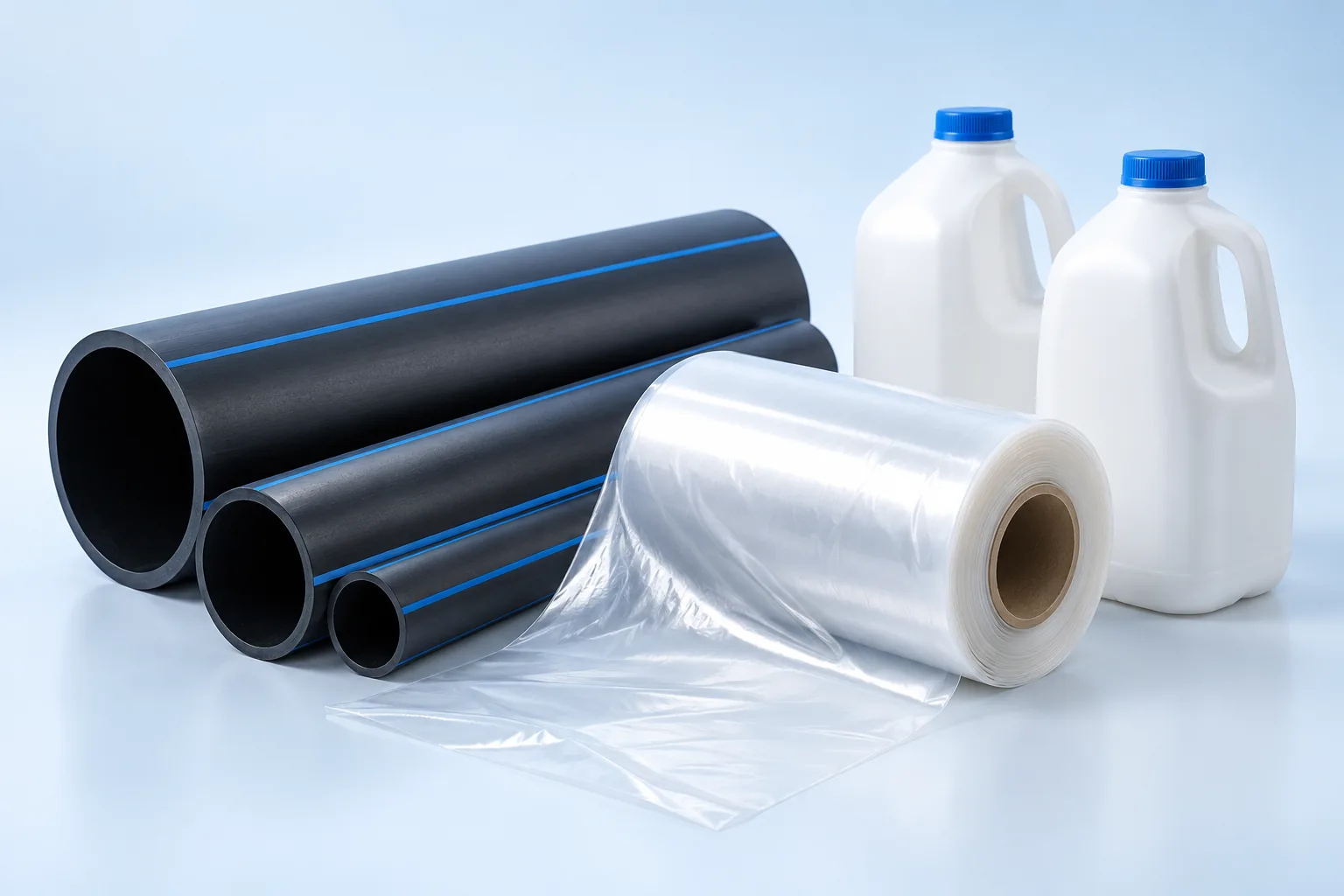
Polyethylene is widely used in packaging films, shopping bags, bottles, drums, water and gas pipes, geomembranes, agricultural films, cable insulation and molded household products.
Water-distribution pipe: suitable HDPE grades can provide good chemical resistance, toughness and long-term performance under pressure. The selected grade must meet the applicable pipe standard and pressure-rating requirements.
Stretch and packaging films: LLDPE is widely used because of its flexibility and resistance to tearing and puncture.
Material selection considerations
When selecting a PE grade, important parameters include density, melt mass-flow rate (MFR), molecular-weight distribution, environmental stress-cracking resistance, tensile properties and processing method.
For pipe applications, long-term hydrostatic strength and the relevant pipe classification are particularly important. For film applications, puncture resistance, tear behavior, sealability and optical properties may be more relevant.